

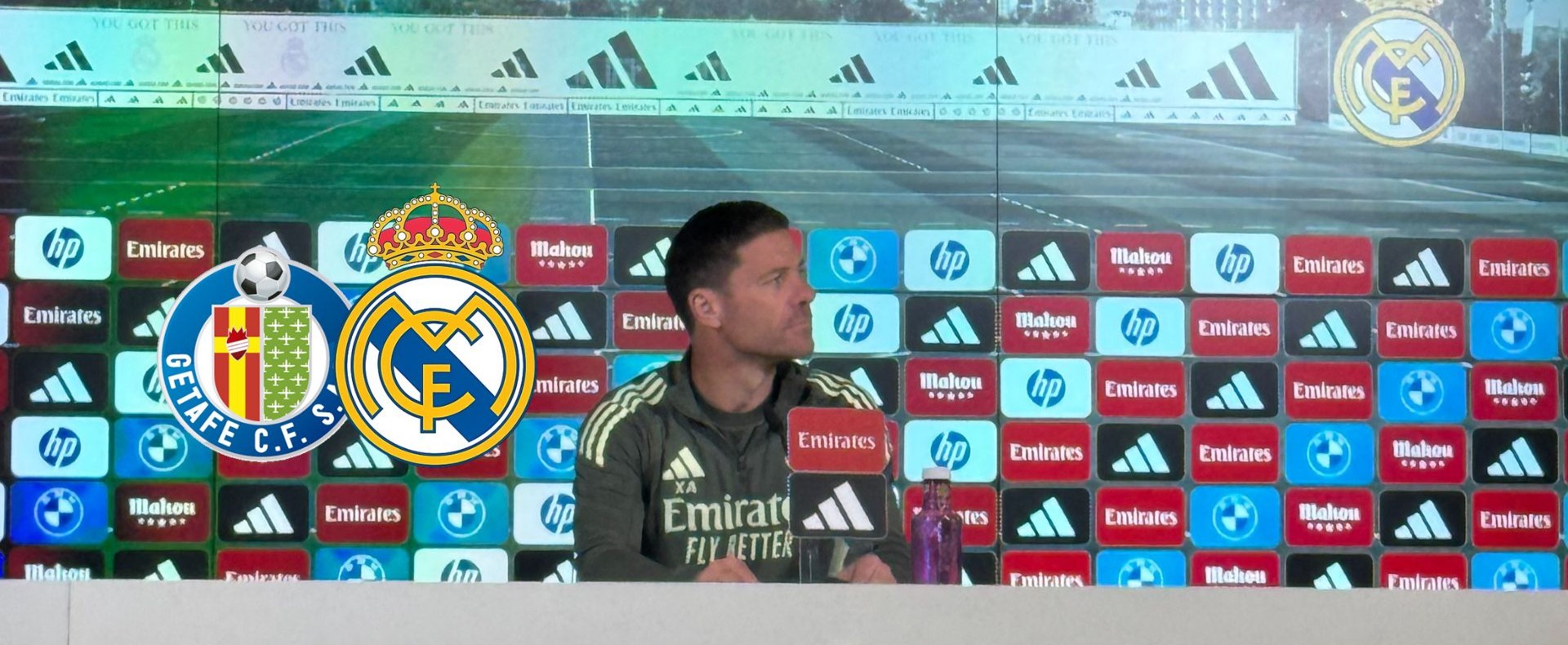
“High Spirits, Hard Questions: Inside Xabi Alonso’s Pre-Getafe Press Conference”
18 October 2025 — Valdebebas, Madrid
The sun shone over Valdebebas when I arrived for the first Real Madrid adventure in my master’s so far. Real Madrid’s pre-match training session had already begun, and from the first drills you could feel it: the squad was sharp, focused, and laughing in between exercises. High spirits, not relaxed, but confident. There’s a difference, and today it showed.
With a crucial week ahead: Getafe in LaLiga, Juventus in the Champions League, and then El Clásico, this was the perfect moment to observe how a top-level club manages tension, expectations, and its relationship with the media.
And then came the main event: my invitation to attend Xabi Alonso’s press conference.
This wasn’t just a privilege. It was a classroom from a tactical genius.
A Press Conference Built on Control and Clarity
Xabi Alonso entered the room, conveying a sense of calm that echoed through the conference room, with the same composure he’s shown throughout his career. If the training session reflected the state of the players, the press room showed the state of the coach. I immediately understood the importance of this portrayal of squad condition to the media.
Throughout the conference, he returned to the same concepts:
- Real Madrid expected a difficult match against a physical and disruptive Getafe side.
- In this instance, the team’s collective discipline mattered more than beauty.
- Individual performances (Camavinga, Güler, Courtois, Mbappé) mattered within the system, not outside it.
This press conference wasn’t about showing off. It was about framing the match correctly: a test of resilience, concentration, and tactical maturity.
Key Moments From Xabi Alonso’s Answers
Arda Güler’s influence
Journalists immediately targeted one of the hottest storylines: the evolution of Arda Güler. Alonso acknowledged his good form and highlighted his ability to find pockets between the lines, important for unlocking tight defences like Getafe’s. Without giving away tactical secrets, he made it clear: Arda is ready. His role in the club wasn’t always so significant, yet, his frequent presence in the media shows his growing importance.
Courtois’ state
With the Real Madrid stopper recently recovering from injury, questions about his condition closely followed. Without overcommitting, Alonso reassured fans, stating: “Courtois is fine, but the staff will monitor him closely”. Demonstrating overall pre-match caution.
Camavinga’s role
A journalist inquired about Camavinga’s performance and influence. Alonso praised his versatility, particularly his ability to create imbalance on the left side in training. Potentially a subtle hint to how Madrid might attack Getafe’s structure?
Valverde and Rodrygo on the right
When asked about using them together, Alonso downplayed the novelty:
“It’s simply a possibility we have.”
Which, in media language, means: Yes, it can work. No, I’m not giving you a headline today.
Mbappé dependency
A trick question designed to draw out newsworthy answers.
Was Real Madrid becoming dependent on Mbappé?
Alonso avoided the trap with elegance:
- praise the player
- highlight the team
- avoid a sensational headline
This is media management at an elite level.
Looking ahead to Juventus & El Clásico
Alonso again remained grounded. He described the Getafe match as “not beautiful but necessary,” reinforcing the message: compete first, shine later. With the underdog, southern Madrid side happy to steal a point from Real Madrid, employing a low, tight defensive block formation.
JOURNALISTIC ANALYSIS — What I Learned Today
Attending this press conference wasn’t just about gathering quotes. It was about understanding how the football media ecosystem functions and how coaches control narrative under pressure.
1. Journalists Guide the Narrative
Each question served a purpose:
- Fan favourites → Arda Güler
- Tactical clarity → Camavinga, double-pivot
- Sensationalist/pressure points → Mbappé dependency
- Stability reporting → Courtois and Alaba
- Fixture stress → Juventus & El Clásico
2. The Coach Manages Risk
Alonso consistently:
- avoided extremes
- refused sensationalist framings
- emphasised team unity
- praised without exaggerating
- acknowledged flaws without creating stories
3. Emotional Tone Matters as Much as Words
In person, Alonso’s delivery was notable:
calm, concise, and never defensive.
This ultimately shapes how the team plays, with public media perception having an immeasurable impact on team performance, nowadays, fan perception is vital to the success of a club.
4. Press Conferences Reflect Training Ground Reality
The mood I witnessed in training, focused, confident, collective, translated directly into Alonso’s answers.
Alignment between pitch and press is a sign of a successful club environment.
Final Reflection — CURVA ROSSI
For my first official entry on CURVA ROSSI, this experience felt symbolic. The experience demonstrated press conference aren’t simply a series of questions and answers, but a delicate interplay, almost a dance between club and press, where the press pushes for headlines and specific responses, and the club manages their image through careful response.
A curva is where emotion lives.
A press room is where emotion is translated.
Today I stood between both worlds.
Real Madrid, go into the Getafe match, and the intense week ahead, with a squad in good spirits, a coach in full control of his message, and a sense of collective purpose.
For me, as a student journalist, this was more than a match preview.
It was my first real lesson in how football communication really works.